Replacing decorative timber barge boards
Published
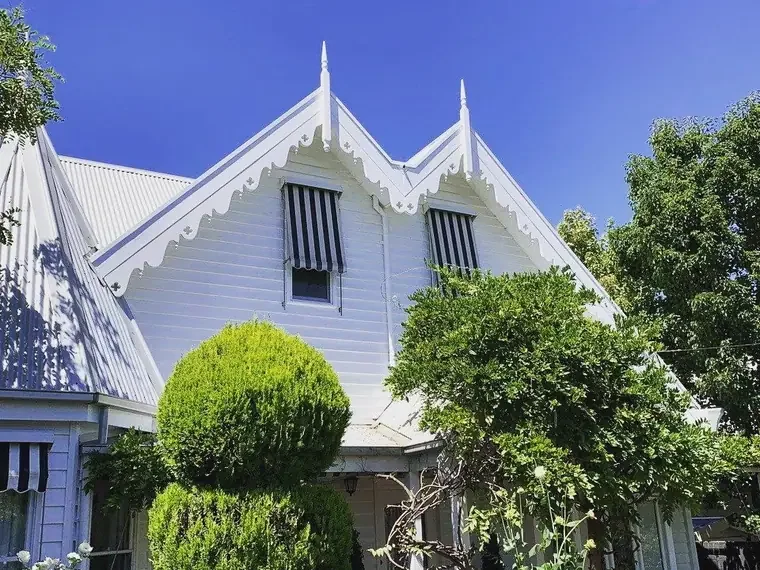
A damaged barge board is easy to notice once you know where to look. It runs along the sloping edge of a gable, framing the roofline. On a house with decorative timberwork, the shape of its lower edge can be just as recognisable as the finial at the peak.
Before choosing a replacement, take a photograph of the whole gable from the ground. Then gather close photos of any sound section you can reach safely. The overall roofline and the small profile details answer different questions, so it helps to have both.
Keep the pitch and the board shape together
The BB3 timber barge board is quoted to suit the roof and the required detail. A 220 × 18 mm section is a common starting point on that listing, not a size to assume for every house. Measure the width and thickness of the existing board, and have the roof pitch confirmed for the order.
For a match, photograph the lower edge square-on. Show a complete repeat of the pattern if one survives. If the two sides of the gable differ because of an earlier repair, point that out rather than sending one photograph and leaving the workshop to guess which side to follow.
Look at the detail around it
A barge board may sit beside a turned timber finial, decorative infill or a vent. Compare the condition and proportions of those pieces before ordering the board on its own. You may want to retain the existing details, match a missing section or plan several replacements together.
The gable products range is a useful way to identify the separate parts. A finial is the upright feature at the peak. Infill sits within the gable shape. Neither gives you the dimensions of the board running along the roof edge, so label each item separately on your sketch.
Decide what you are asking us to copy
The BB3 listing includes shaped lower-edge options and decorative spindle work. If the original has a scalloped edge, show the curve and its spacing clearly. For a toothed edge, record the repeat and the remaining material above it. Add a side view so the board thickness is visible too.
Some jobs can use a close catalogue reference. Others need the outline assessed from an original, a drawing or a surviving section. Our timber matching enquiry lets you send those references together. Mark any missing dimensions as approximate so they can be checked before manufacture.
Finish the measuring before arranging replacement
Have your builder or installer confirm the lengths, roof junctions and fixing details. Keep those checked dimensions with the photographs. If the old board is being removed, ask whether a sound section can be retained as a sample.
Include the quantity, postcode and whether you need boards for one gable or several. For external timber, also check the painting and care guidance and agree who will prepare and finish the pieces. A clear brief helps the new work sit comfortably with the timber that is staying.
Talk to the workshop
Tell us about your project. Call 03 9720 7266 or 1300 547 581, or send us the details below.